The UK is forecast to experience weaker growth and higher inflation due to the impact of the war in the Middle East, according to an influential global policy group.
It means this year the UK is expected to have the second-highest inflation rate among the G7 group of advanced economies - at 4%, the Organisation of Economic Co-operation and Development (OECD) said.
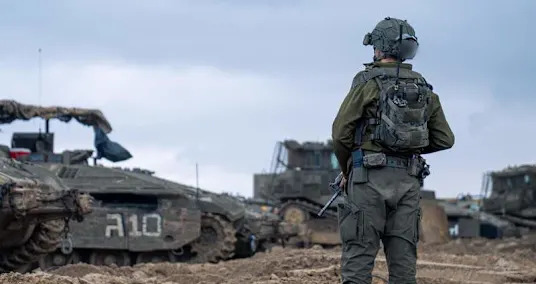
The body has also downgraded forecasts for many of the world's biggest economies due to the US-Israel war with Iran.
A prolonged conflict could trigger "significant energy shortages" globally, it warned, while if the sharp rise in fertiliser prices is sustained crop yields will be impacted and food prices will soar next year.
The OECD's new forecast for UK inflation is up from the rate of 2.5% it had predicted at its previous report in December.
It then forecasts inflation to drop to 2.6% in 2027 - still up from its previous projection of 2.1%.
Economic growth is now forecast to be 0.7% in the UK this year, down from 1.2% it had previously expected. Its forecast for 2027 is unchanged.
In early March the government's official forecaster, the Office for Budget Responsibility (OBR), cut its expected growth rate for 2026 to 1.1% from the 1.4% it predicted in last year's Budget.
But this forecast was made before the Iran war, which the OBR said could have a "very significant" impact on economies.
Among G7 countries, only the US is predicted to have higher inflation than the UK in the OECD's forecast, while only Italy is expected to see weaker growth.
Global growth is expected to fall to 2.9% this year before nudging up to 3% in 2027. And inflation across the G20 countries is predicted to be 4%, up from previously expected, dropping back to 2.7% next year.
The OECD said its predictions depend on the assumption that the current energy market disruption eases, with oil, gas and fertiliser prices falling from summer onwards.
It said measures from governments to cushion households from the impact of higher energy prices "should be timely, well-targeted on households most in need and viable firms, preserve incentives to lower energy use and have clear expiry mechanisms".
Policies that improve domestic energy use and lower reliance on imported fossil fuels over the medium term were a priority, it added.
The forecast comes as UK clothing retailer Next warned it was likely to have to raise prices for customers if the Iran war persists.
It said overseas sales had been strong up to when the conflict in the Middle East broke out, and instability may continue to restrain growth in that region.
latest_posts
- 1
 Watching ‘Home Alone’ with the kids this holiday season? Brace yourself for '6-7.'
 - 2It May Take a Year to Restore Abu Dhabi Aluminum Output, EGA Says
- 3Uranus's small moons are dark, red, and water-poor
- 4RSF attack on Sudan’s South Kordofan kills at least 14, including children
- 5German-Polish man charged with calling for attacks on top politicians



- The new queen of country music has no scandals and no gimmicks — and just broke a record set by Taylor Swift
- Satellite observations offer insight into a tsunami's early stages
- Novo and Lilly cut prices of weight-loss drugs in China
- IDF continues counterterrorism operations in Gaza Strip, including destroying terror tunnels
- FDA updates risk classification for voluntary shredded cheese recall
- Ukraine confirms defence and energy ministers at second attempt
- Viruses aren’t all bad: In the ocean, some help fuel the food web – a new study shows how
- Excited visitors for NASA's moon launch jockey for prime views
- Travels to Dream Objections in Europe