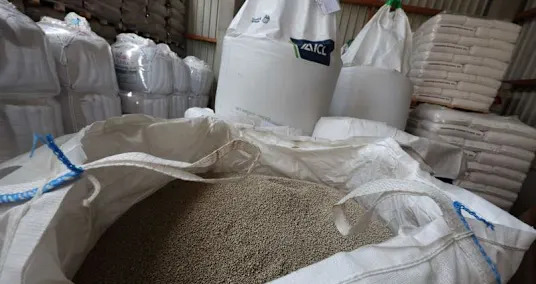

The war in Iran has resulted in a 30-40% spike in the cost of mineral fertilizer since the start of the year, threatening international food prices, according to German experts.
"World market prices for nitrogen fertilizer are increasingly approaching the peak levels we saw at the start of Russia's war against Ukraine [in February 2022]," said Philipp Spinne, managing director of the German Raiffeisen Association (DRV).
In Europe, however, consumers have not yet directly felt the effects because many farmers had already purchased their spring fertilizer before the Iran war began, the Bavarian Farmers' Association told dpa.
But should the war drag on, production costs in Germany and other countries are likely to rise, and with them, producer prices, it warned.
Four years ago, the threat to global food security feared by some experts did not materialize.
This was partly because Russia – a leading fertilizer producer – benefited from the invasion of its neighbour and actually increased its fertilizer exports.
The European Union has since gradually introduced tariff increases on Russian nitrogen fertilizers.
High energy prices are primarily driving the pricing spike, with gas prices accounting for up to 90% of the costs of ammonia and nitrogen production, said Germany's Agrar industry association.
Therefore, if gas becomes more expensive, fertilizer prices automatically rise. But if farmers use less fertilizer, crop yields suffer as a result.
latest_posts
- 1
 'A prank': Israel Police detain suspect for shooting rubber bullets at Ashkelon kindergarten
 - 2Must-Sit in front of the Programs from Europe and the US
- 3Al-Sharaa denies he called for 80% of Syrians to return from Germany
- 4Strengthening through Wellness: Individual Preparation Achievement
- 5Changing Negative Cash Mentalities: Enabling Your Monetary Excursion





- 4 buzzy new TV shows to watch — plus the return of 'The Comeback,' 'Jury Duty' and more
- Israel Police decry online defamation campaign against female officer in Jerusalem
- Pick Your Number one breakfast food
- Former Israeli judge does not expect Netanyahu to be pardoned
- Malaysian broadcaster rejects altered graphic about electricity rate hike
- Mysterious bright blue cosmic blasts triggered by black holes shredding stars, scientists say. 'It's definitely not just an exploding star.'
- My daughter is in the #1 movie in the country. She still has to finish her math homework.
- The most effective method to Pick The Right Speakers
- Vote In favor of Your Favored Shimmering Water